Stockton Heath has a very long and varied history. There has been a settlement here since Anglo-Saxon times and ‘The Heath’ was made an important resting place for the marching Roman armies. It was also a camp
for both armies in the civil war.
The Romans made Wilderspool Causeway, London Road and Chester Road as routes for their armies to march along. Thereafter used as the main trade routes in and out of Warrington.
In the early 1800’s (1805 – 1808 ‘ish) a house stood at the corner of London Road and Walton Road which was the home of Edward Fenna and his family who was the Parish Constable. Outside the house were the Parish Stocks (removed 1850). The house was called the “Stone Jug”.
In 1894 an Act of Parliament set up local Parish Councils. Stockton Heath was part of the township of Appleton. Two years later Stockton Heath formed its own Parish Council and one of its first jobs was to rename ‘Pigeon Bank’ as ‘Victoria Square’ after Queen Victoria.
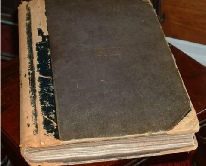
Parish Council History
The first A.G.M. was held on the 4th December 1894, in St. Thomas’s schoolroom.
The following points give a short overview of how this Parish Council has evolved.
- The parish meeting venues:
- St. Thomas’s schoolroom (the original school, was on the site where the Stockton Heath Medical Centre now stands).
- National School, church room.
- Hall’s Cafe (first used in 1909).
- The Council School (first used in 1919).
- Stockton Heath was part of the parish of Appleton until 1897.
- Members of the Council were elected annually, until 1901 when Councillors were then elected every three years.
- Nomination papers for the election were handed in at the AGM and a show of hands was taken to elect members until 1937.
- First female Parish Councillor was Mrs Annie Robinson who was first elected in 1928.
Stockton Police Station
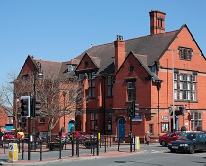 In the early 1800 (1805 – 1808 ‘ish) a house stood at the corner of London Road and Walton Road which was the home of Edward Fenna and his family who was the Parish Constable. Outside the house were the Parish Stocks (removed 1850). The house was called the “Stone Jug”. Fenna would not have had a uniform and was unpaid for the work he did, which was not a lot. He would walk the streets with a lantern at night and have a rattle for attracting attention. He did get paid expenses for duties such as relief of the poor, flogging people and putting people in the stocks, etc.
In 1864 a single storey building was built on the existing site and there was one Sergeant and one PC for the village. The area outside the Police Station (Victoria Square) was called ‘Pigeon Bank’ and belonged to the Police Station. Every year the fairground from Warrington (Silcocks) would stop at Stockton Heath on their way to Stoke. With the permission of Sgt. Norris they set up their tents, Dobbie horses (roundabouts), Coconut Shy’s etc. It is recorded that one year Sgt. Norris’ son who was ‘of age’ (over 12 generally) came out of the Police Station, jumped on a Dobbie Horse and broke it.
In 1911 that Police Station was closed and demolished with a new Police Station opening the following year. The dates are to be seen on the headers of the drainpipes.
The new Station incorporated a Magistrate’s Court and living quarters for the Inspector. Gas lamps, some of which can still be seen in the cells, illuminated the Police Station. The Inspector’s house that was the area now used by the writing room, gents toilet and kitchen and upstairs the waiting room toilets and Court two. The Inspector’s daughter who lived until recently in Stockton Heath recalled that her bedroom was the Court Waiting Room. After she came home from school she would have to clean and polish the Court floors for no payment.
Outside the Police Station on the side where the Inspector’s front door is situated (now bricked up) above and to the left marks can still be seen where a bell cage would hang with a long chain down to beside the door. People could, in the case of emergency, ring the bell and attract the attention of the Constable who was on patrol in the village.
In 1974 Stockton Heath, under Local Government re-organisation joined Warrington Police. The Court remained in use until 1988 when the cells could no longer be used to house prisoners. A few cases have been heard after that date, mainly guilty pleas and Coroner’s Courts.
A recorded motto from the old Police Station was:
I open the door and enter in whether we lose,
or whether we win. Whether we rise, stand or
Fall. We’ll do our duty, to please you all.
Stockton Heath War Memorial
War Memorial World War 1 graves in churchyard section order
NAMES LISTED ON ST THOMAS NOT ST HEATH MEMORIAL
World War 1 graves in churchyard section order
World War 1 graves in churchyard section order
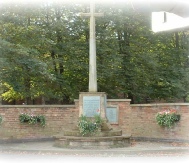 Information for the above has been taken from the following records:
Stockton Heath War Memorial
St. Thomas’ Church Parish Magazines 1914 – 1918.
Commonwealth War Graves Commission Records.
The Parish Council thanks Derek Hill-Willis, Parish Archivist.
August 2014
FREEDOM OF THE PARISH
In bygone days the granting of freedom of the parish awarded some of the following rights and privileges:
The right to graze sheep or cattle on common land
The right to trade inside the city wall
The right to walk troops through the town or parish with drums beating and colours flying
Rights are however nowadays mainly symbolic.
The following have been granted Freedom of the Parish in recognition of services to the community by Stockton Heath Parish Council:
Mrs. June Daynes May 2008
Mrs Jean Bullock May 2008
Mr Gary McIntyre July 2011
Mrs Helen Curwen October 2016
Mr Tudor Pope October 2016
Mrs Wendy Emsley October 2018